Introduction
There’s a strange habit among people who search finance topics online: they type in two names that have nothing to do with each other and expect Google to make sense of it. Peter Lynch and Safra Catz is one of those pairings. One spent his career picking stocks from a desk at Fidelity, retiring from active fund management back in 1990. The other spent decades inside Oracle, working her way up from an executive role in 1999 to the CEO chair, then eventually to vice chair of the board in 2025. They’ve never been photographed together. No joint interview exists. No business deal ties them. And yet, oddly enough, putting them side by side is a genuinely useful exercise — not because they’re connected, but because one built a philosophy for judging companies, and the other happens to run one that fits neatly under that lens. So that’s what this is: not a biography of two strangers, but a test of whether Lynch’s old rules still hold up against a company like Oracle.
An Unlikely Duo Worth Studying Anyway
Lynch and Catz never crossed paths professionally, as far as any public record shows. That’s worth saying plainly upfront, because it’s tempting to invent a connection where none exists — and that’s not what this is about.
What they do share, if you squint, is an allergy to hype. Lynch made his name at Magellan by finding boring, overlooked companies before anyone else bothered to look. He wasn’t chasing headlines; he was chasing spreadsheets nobody else had opened yet. Catz built her reputation inside Oracle the same way — not as the face of the company (that was always Larry Ellison’s job), but as the person who actually understood the numbers well enough to run acquisitions, including the messy, years-long fight to acquire PeopleSoft back in 2005.
So the comparison isn’t “these two know each other.” It’s “these two operated on the same instinct, just from opposite sides of the table.” One picked stocks. One ran a company. Both distrusted noise.
What Lynch Actually Meant by “Buy What You Know”
Here’s the thing people get wrong about Lynch’s most famous line. He wasn’t saying “buy stock in the coffee shop you like.” He was saying: start with something you understand, then go do the boring work — read the earnings, check the growth rate, figure out if the stock’s price actually makes sense given how fast the company is growing.
That last part is where his PEG ratio came in — price-to-earnings measured against expected earnings growth. A stock could look expensive on the surface and still be a bargain if growth was fast enough to catch up. He also loved what he called tenbaggers, stocks with the potential to grow tenfold, and he tended to find them in unglamorous places — not the sectors everyone was already excited about.
None of this required genius. It required patience and a willingness to actually read the filings instead of trusting the narrative. That’s a detail that gets lost whenever people romanticize Lynch’s track record.
Catz Didn’t Arrive at Oracle’s Top Floor Overnight
Catz’s story is a slow build, not a lightning strike. She earned a business degree from Wharton, fpeter lynch and safra catz followed it with a law degree from Penn, and spent years on Wall Street focused specifically on software companies before she ever set foot inside Oracle. That combination — legal training plus financial instinct — shaped how she operated for the rest of her career.
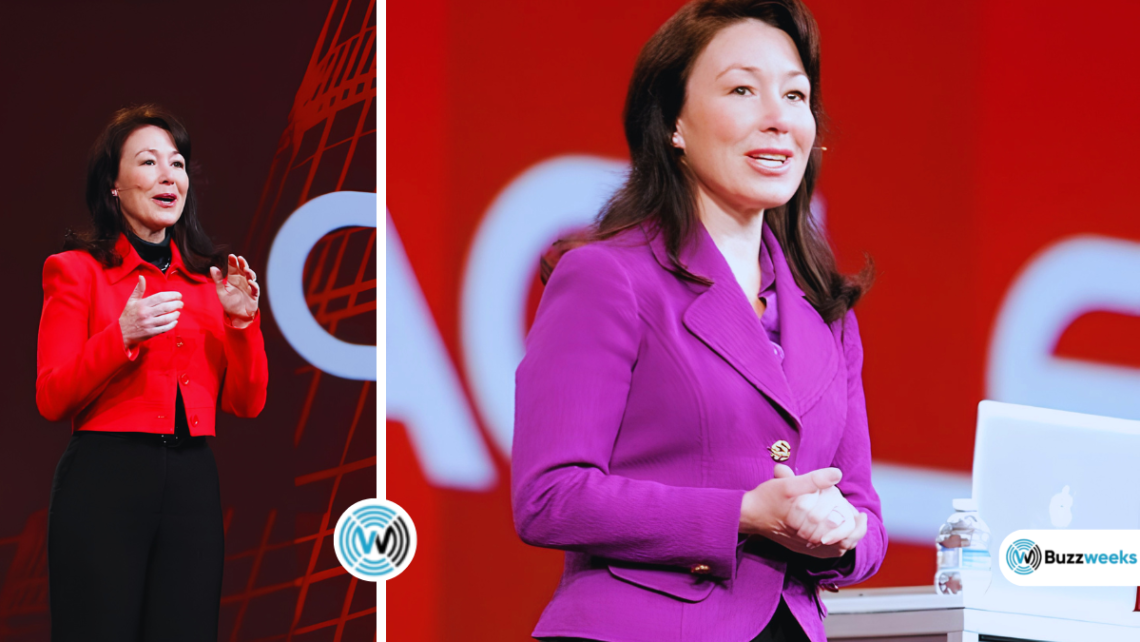
She joined Oracle in 1999, years before anyone was talking about her as a future CEO. She became co-CEO in 2014, sole CEO in 2019, and stayed there until 2025, when Oracle restructured its leadership and she moved into the executive vice chair role, with Clay Magouyrk and Mike Sicilia stepping in as co-CEOs.
What stands out about her run isn’t flash. It’s that people who worked around her consistently described her as the person buried in spreadsheets before anyone else showed up — not exactly a glamorous reputation, but exactly the kind of reputation Lynch respected in the executives he studied from the outside.
Running Oracle’s Numbers the Way Lynch Would Have
If Lynch were handed Oracle as a case study today, he wouldn’t start with the AI headlines. peter lynch and safra catz He’d start with a plain question: does the growth actually hold up across more than one quarter? Oracle’s recent results give an interesting answer here — the company has reported a dramatic rise in its remaining performance obligations, essentially a backlog of contracted future revenue, driven by a string of large, multi-year cloud infrastructure deals.
Lynch was suspicious of one-hit numbers. He wanted a pattern, not a headline. Oracle’s backlog growth has been built off repeated large contract wins rather than a single spike, which is closer to the kind of consistency he tended to trust.
He was also famously wary of companies that wandered into businesses they didn’t understand — he had a name for it, “diworsification.” Oracle mostly avoided that trap by staying close to what it already knew: enterprise software, extended into cloud and AI infrastructure rather than replaced by some unrelated venture. That kind of narrow, deliberate expansion is closer to what earned his trust than his skepticism.
The Debt Question Lynch Never Let Slide
Lynch cared about debt in a way a lot of growth-chasing investors don’t. He wasn’t against it outright, but he wanted to know it was manageable, not a ticking clock. Oracle’s balance sheet has shifted meaningfully in recent years as the company has taken on debt to fund the infrastructure buildout tied to its cloud and AI expansion.
That’s exactly the kind of detail Lynch would have flagged for a closer look — not necessarily a dealbreaker, but a variable that changes the risk profile of the whole story. He also paid attention to whether management actually owned a real stake in the business, rather than just collecting a salary. Oracle checks that box pretty clearly, with Ellison’s large ownership position and Catz’s own long tenure and equity stake — the kind of “skin in the game” detail Lynch treated as more meaningful than most analysts bothered to.
What a CEO Handoff Looks Like Through an Investor’s Squint
Leadership transitions make investors nervous, and usually for good reason — plenty of companies have stumbled hard right after a founder or long-serving CEO steps aside. Oracle’s 2025 shift, with Catz moving to vice chair and Magouyrk and Sicilia stepping in as co-CEOs, is the kind of moment Lynch would have wanted studied calmly instead of reacted to on instinct.
He didn’t treat leadership change as automatically good or bad. He wanted to know whether new leaders came from inside the company or were parachuted in from outside, and whether they actually understood day-to-day operations. Both incoming co-CEOs at Oracle came from within — one from cloud infrastructure, one from industry applications — which lines up with the kind of continuity he tended to view more favorably.
There’s a subtler point buried in here too. A company changing leadership while its core numbers are strengthening is a very different situation than a company changing leadership because something already broke. Oracle’s transition arrived alongside record contract backlogs, not a crisis — and that context changes how the whole handoff should be read.
The Overlap That Actually Matters
Strip away the coincidence of two names appearing in the same search bar, and what’s actually useful here is the framework, not the pairing. Lynch’s lesson was that ordinary observation, paired with real financial homework, beats blindly following whatever the market’s excited about that week. Catz’s career adds the operator’s version of the same idea: that unglamorous consistency and obsessive attention to detail can outlast flashier competitors over a long enough stretch of time.
Put the two together and you get a pretty simple filter for judging any company. Is the business understandable? Is the growth consistent rather than manufactured by one good quarter? Is leadership actually invested and experienced, not just good at talking to the press? None of that guarantees a stock will go up. But it’s the kind of discipline that both of these very different careers were built on.
Final Summary
Peter Lynch and Safra Catz never worked together, and no documented relationship ties them beyond both being disciplined, long-tenured figures in American business. But running Oracle through the checklist Lynch spent decades refining turns out to be a genuinely worthwhile exercise. The company’s growing cloud contract backlog, its 2025 leadership transition into co-CEOs following Catz’s long run at the top, and its heavily invested insider ownership all map onto the kind of patterns Lynch respected. Whether that makes Oracle a smart buy today is a separate question — one that depends on price, timing, and how much risk any individual investor is willing to carry. Lynch himself would probably say the same thing he always said: no framework replaces doing your own homework.
8 Unique FAQs
1. Did Peter Lynch and Safra Catz ever actually work together?
No. There’s no public record of any professional relationship between them. Lynch’s career was built at Fidelity; Catz’s was built at Oracle.
2. What made Peter Lynch’s Magellan Fund so famous?
He managed it from 1977 to 1990, and it reportedly averaged around 29% in annual returns during that stretch, growing from a small fund into one of the largest in the world.
3. What was Safra Catz doing before she became Oracle’s CEO?
She earned degrees from Wharton and Penn Law, spent years on Wall Street covering software companies, then joined Oracle in 1999, working her way up over more than a decade.
4. Is Safra Catz still Oracle’s CEO today?
No. In 2025 she moved into the role of executive vice chair of Oracle’s board, with Clay Magouyrk and Mike Sicilia named co-CEOs.
5. What’s the real meaning behind Lynch’s “buy what you know” advice?
It wasn’t about buying stock in brands you personally like. It meant starting with something understandable, then doing the actual financial research before investing.
6. Why bother comparing an investor to a CEO at all?
Because both represent long-term, unglamorous discipline — one evaluating businesses from the outside, the other running one from the inside, using surprisingly similar instincts.
7. Which financial metric was Lynch most known for using?
The PEG ratio — price-to-earnings weighed against expected earnings growth — was one of his go-to tools for spotting undervalued stocks.
8. Does any of this mean Lynch would have bought Oracle stock?
There’s no way to know for certain, since he never publicly evaluated Oracle under Catz’s leadership. This is a framework applied after the fact, not a documented endorsement.