Introduction
Somewhere in the archives of Spanish film production from the late 1970s, there’s a name that shows up in the credits of a couple of small, unremarkable movies — the kind nobody remembers unless they worked on them. That name is Carlos Scola Pliego. For most of his career, it would have stayed exactly that: a name in small print, unnoticed by anyone outside the industry. Then, in 1989, he married Sade Adu, and suddenly a man who spent his working life behind a camera became a subject of curiosity for people who had never seen a single frame he helped produce.
It’s a strange kind of fame, being known mainly for who you married rather than what you did. Carlos Scola Pliego never fought that framing, and he never really tried to escape it either. He just went quiet. No interviews about the marriage, no comments about the divorce, nothing on social media, nothing sold to a tabloid. Six years married to one of the most guarded singers in modern music, and then — nothing. That silence is really the whole story here, and it’s worth taking seriously rather than trying to fill it in with guesswork.
What follows is what can actually be confirmed about him: his work in Spanish cinema, the timeline of his marriage, and the reasons so much of his life remains a blank page. Where the record runs out, I’ll say so plainly instead of pretending otherwise.
Before Sade: A Working Life in Spanish Film
Long before anyone was searching his name because of a pop star, Carlos Scola Pliego was doing the unglamorous work that keeps a film set running. He’s credited as a script supervisor on La boda del señor cura in 1979, and again the following year on Opera Prima. These aren’t the kinds of jobs that get you profiled in a magazine. Script supervisors sit just off-camera making sure continuity holds together — that an actor’s coffee cup is in the same hand it was in the previous take, that a jacket isn’t suddenly buttoned differently. It’s detail work, and it takes a particular kind of patience.
By the early-to-mid 1980s, he’d moved up into assistant directing and second assistant directing. That’s not a small jump. Assistant directors are the ones actually running the floor of a production — coordinating departments, managing schedules, absorbing the chaos so the director doesn’t have to. Climbing from script supervisor into that role usually means you’ve earned people’s trust on set, not that you talked your way into a favor.
Later accounts describe him branching further, into writing, producing, and eventually directing documentaries, with subjects reportedly touching on wildlife and cultural themes. If that’s accurate, it points to someone who kept adapting rather than settling into one lane. Fiction filmmaking and documentary work ask for pretty different instincts — one is about control, the other about patience with the unscripted. Moving between them isn’t common, and it says something about range, even if the specifics of those later projects aren’t well documented anywhere reliable.
It’s also worth saying clearly: there’s no comprehensive, verified filmography for him floating around. What exists is a rough outline pieced together from a handful of credits and secondhand descriptions. Anyone claiming to have his full body of work mapped out is likely filling gaps with assumption.
What’s Actually Known About Where He Came From
Here’s where I have to be upfront about the limits of what’s out there. Carlos Scola Pliego’s birth date, birthplace, parents, and childhood are not reliably documented anywhere. A few biography sites have thrown out guesses — one birth year, one claim he was born in the United States in the 1960s — but none of it holds up against actual sourcing. It reads more like speculation dressed up as fact, and it shouldn’t be repeated as if it were settled.
What does hold up, consistently, across the limited coverage that exists, is his identity as Spanish and his professional ties to the Spanish film industry specifically. That’s really the only anchor point. Everything else — his family, his schooling, his upbringing — sits in a gap that nobody has filled with anything credible.
This isn’t unusual, honestly. Someone working as a script supervisor or assistant director in the late ’70s and early ’80s wouldn’t have had a reason to be profiled anywhere. Those jobs don’t come with press coverage. It’s usually only when someone becomes famous through some other door — marriage, in his case — that anyone goes looking for the earlier chapters, and by then those chapters are often just gone, unrecorded, lost to a pre-internet era that didn’t bother archiving the lives of people working behind the camera.
And he doesn’t seem to have tried filling that gap himself. Some people who marry into fame eventually sit down for an interview and lay out their own backstory. He hasn’t, at least not in any way that’s publicly accessible. Whether that’s deliberate reticence or just genuine disinterest in being a subject, it’s hard to say. But the pattern is consistent enough that it seems like a choice, not an accident.
The Marriage: Six Years, Very Few Details
The one part of Carlos Scola Pliego’s life that is solidly documented is the marriage itself. He and Sade Adu married in Spain in 1989 — right around the height of her international success, following the massive commercial run of Diamond Life and Promise. They divorced in 1995. No children.
That’s genuinely most of what’s confirmed. There’s no widely verified account of how they met, what pulled them together, or what eventually pulled them apart. Some writers have speculated that the marriage offered Sade a kind of private refuge during a period when she was arguably one of the most recognizable voices on the planet, and that’s a reasonable guess given how consistently private she’s been throughout her entire career. But a reasonable guess isn’t the same as a confirmed fact, and nobody involved has ever gone on record to settle it either way.
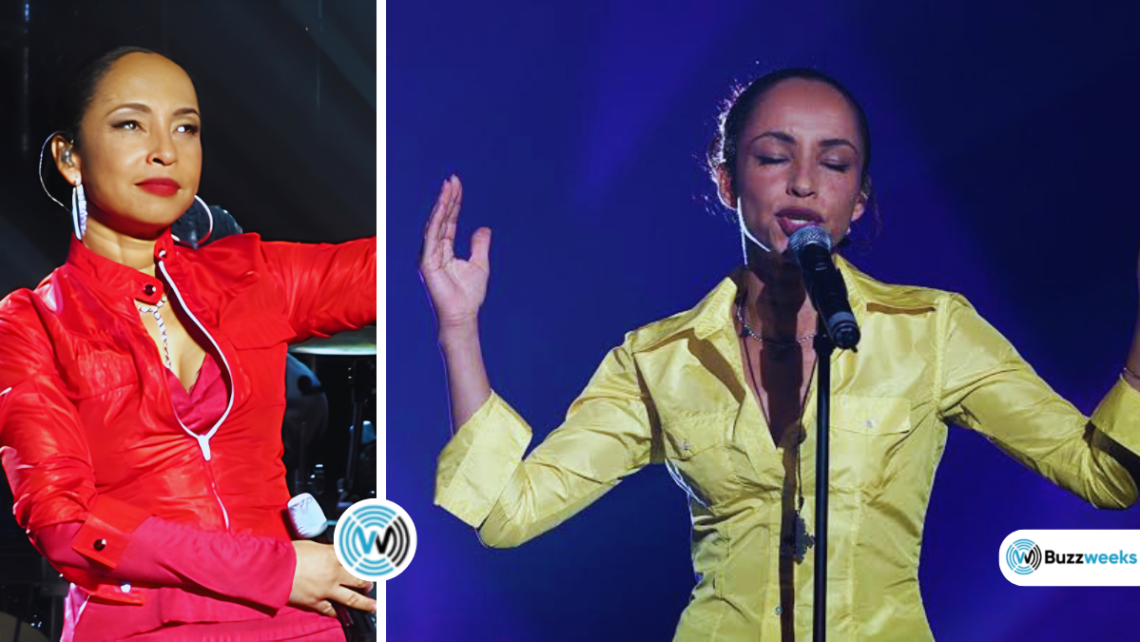
What strikes me most, looking at this from a distance, is how neither of them said much even while it was happening. Sade has spent decades being visible as a performer and almost entirely invisible as a person — famously scarce with interviews, famously absent from the celebrity press machine that swallows most musicians of her stature. Carlos Scola Pliego seems to have matched that instinct exactly. Not a single public comment from him, before or after the divorce, about the marriage or about her. Two private people found each other, married, separated, and both went straight back to being private. There’s a kind of consistency in that, even if it leaves very little for anyone trying to write about it.
After the Divorce: Nothing to Report, and That’s the Point
Since 1995, there’s essentially no public trail. No remarriages that have been verified, no public relationships, no interviews, no confirmed social media accounts. He hasn’t written a memoir, hasn’t done a “what really happened” tell-all, hasn’t shown up in any retrospective piece about Sade with his own commentary attached.
That’s genuinely unusual. Former spouses of major musicians tend to resurface — sometimes for decades — especially when there are kids involved, or money disputes, or some kind of falling-out that eventually leaks. None of that applies here. No children means one less reason for their lives to stay entangled after the divorce. Add that to his own apparent instinct toward privacy, and it’s not hard to see how he managed to step out of the spotlight so cleanly.
I want to be careful here, though, because “no public information” doesn’t mean “nothing happened.” He didn’t stop existing in 1995. He presumably kept working, kept living, kept doing whatever came next. It’s just that none of it made it into any source that can currently be verified. Any specific claim about what he’s doing now, where he lives, or who he’s with should be treated as unconfirmed, because right now, it is.
Why People Are Still Looking Him Up
The interest in Carlos Scola Pliego tends to spike whenever Sade herself comes back into the conversation — a new project, a critical reassessment, an anniversary of one of her albums. Her one confirmed marriage naturally becomes part of that conversation, almost by default, since it’s one of the few solid personal facts available about someone who has otherwise kept her private life extremely tightly held.
There’s also just something inherently interesting about someone who had a clear opportunity to cash in on a famous connection and chose not to. We’re used to the opposite pattern — the ex-spouse who writes the book, does the podcast circuit, sells the story. Carlos Scola Pliego did none of that, and in a media culture built almost entirely around monetizing proximity to fame, walking away quietly reads almost like a plot twist.
And then there’s the simple mechanic of curiosity feeding on absence. The less information there is about someone, the more people seem to want to find it, which paradoxically keeps his name circulating decades after anything actually happened. It’s less about him, at this point, and more about the shape of the mystery itself.
Final Summary
Strip away the speculation, and what’s left is fairly modest: Carlos Scola Pliego is a Spanish filmmaker who worked his way through script supervision and assistant directing in the late 1970s and early 1980s, later reportedly moving into writing, producing, and documentary work. He married Sade Adu in Spain in 1989, they divorced in 1995 without children, and in the thirty years since, he has essentially vanished from public view by choice. His childhood, education, and current life remain undocumented in any source worth trusting, and the more elaborate claims circulating online about his background don’t hold up to scrutiny. What’s left is a quiet, private man whose one widely known chapter happened to intersect, briefly, with someone considerably more famous.
8 Unique FAQs
1. Who is Carlos Scola Pliego?
A Spanish filmmaker best known publicly for his 1989–1995 marriage to singer Sade Adu, though he had an independent career in film before that.
2. What did he do in the film industry?
He worked as a script supervisor and assistant director in the late 1970s and early 1980s, later reportedly moving into writing, producing, and documentary directing.
3. When did he marry Sade Adu?
In 1989, in Spain.
4. Why did the marriage end?
No confirmed public reason has ever been given; the couple divorced in 1995 and neither has spoken publicly about it.
5. Did they have any children?
No, publicly available information confirms they did not have children together.
6. What is he doing now?
This isn’t publicly known. He hasn’t maintained any documented public profile since the divorce.
7. Has he ever spoken publicly about Sade or the marriage?
No verified interviews or public statements from him on the subject exist.
8. Why is so little known about his early life?
He worked in behind-the-camera film roles during an era that rarely documented such careers, and he appears to have chosen ongoing privacy since.